Shimla holds two records for me. At 2,276 metres above sea level it is the highest altitude of anywhere that I have visited. It is also 880 miles from the coast, the second record. Considering the furthest I have ever lived from the coast is approximately 7 miles, currently I live less than half a mile from the sea, this may never be beaten.
I am a coastal person, I could not envisage not being close to the sea. And yet I enjoyed the other-worldness of Shimla on the edge of the Himalayas.
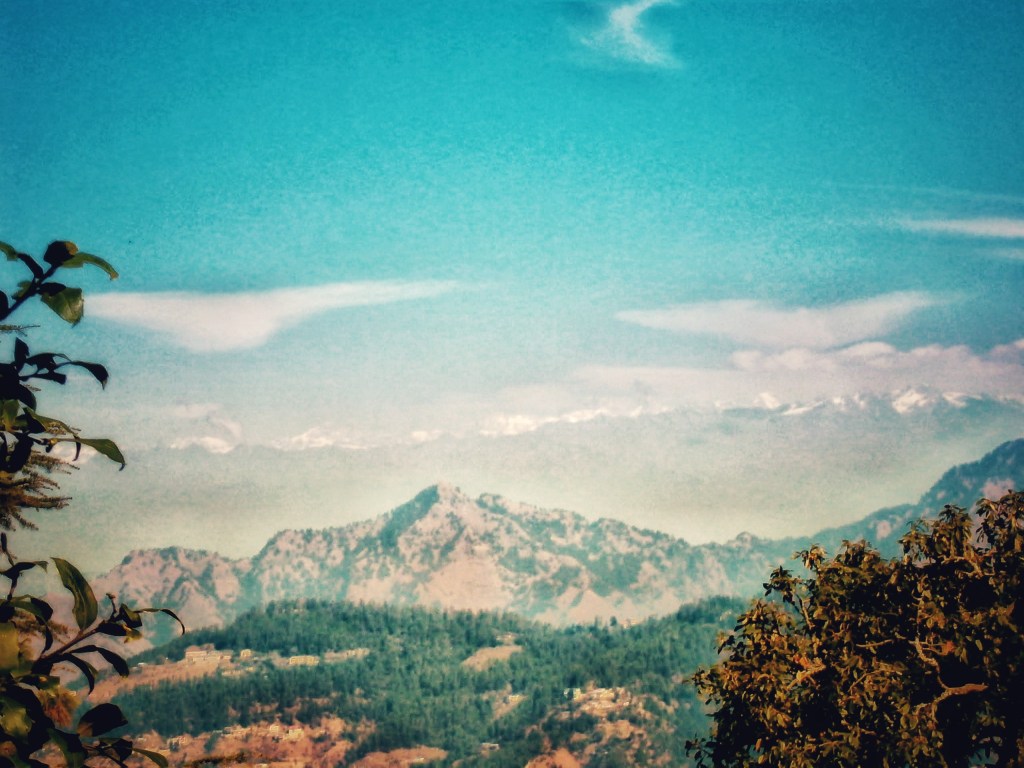
Far off into the distance there were higher mountain peaks, beyond them higher again and beyond them higher again. On the the third set of ranges that we could see there was snow and people had told us they had watched it getting closer over the weeks.
Shimla is famous for its large outdoor skating rink, I think they flood an area during the winter and it becomes a tourist spot for those who may never have seen snow or ice. It demonstrates another extreme in this country.
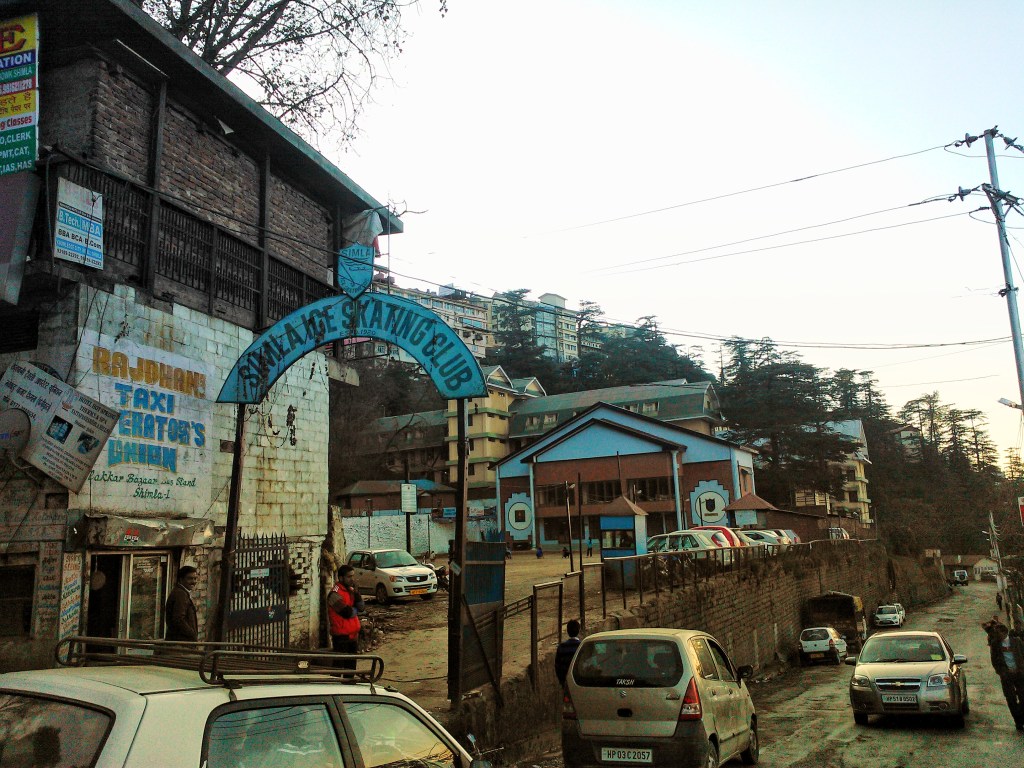
The cooler, crisp air of Shimla makes it stand out from the rest of the trip. We had been transported out of the heat and dust of the big cities that we had visited. Views across the Himalayas, thick forests and the British architecture makes this a unique location.
As a group we knew that we were on the final stage of the trip, we were tired but ready to explore one last location. The hotel was comfortable enough and we needed to adjust from the hot, dry air we had been breathing for almost three weeks.
It is not a great tourist venue except for the contradictions it holds. It is famous for the Jakhu temple, the Viceregal Lodge and the largest natural ice skating rink in India. (I don’t think the competition is that strong)
Over breakfast we looked for other attractions to visit. The world’s highest cricket ground was a 45 minute taxi drive away and there was a couple of boys who were tempted to make the trip to say they had been there. There was also a small zoo but Gilly had hoped I would set the agenda for our final days. When in Shimla you have to visit the Jakhu temple (the monkey temple) and so I thought that was the best place for us to start.
The statue of Lord Hanuman – the monkey god dominates the Jakhu hills.
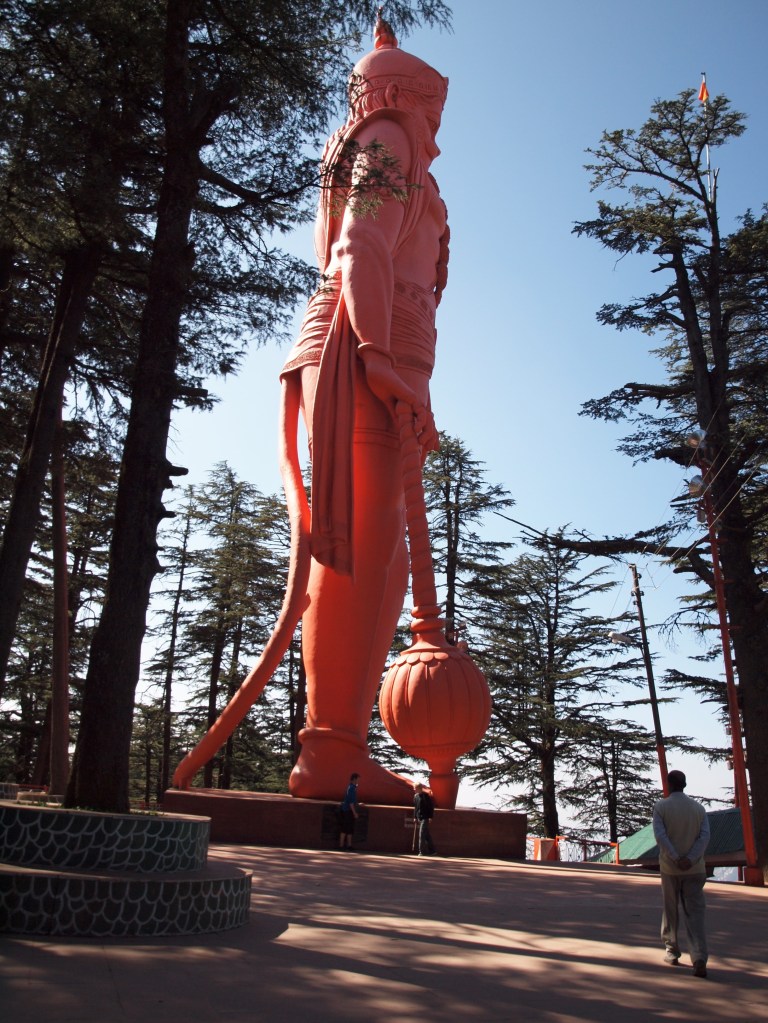
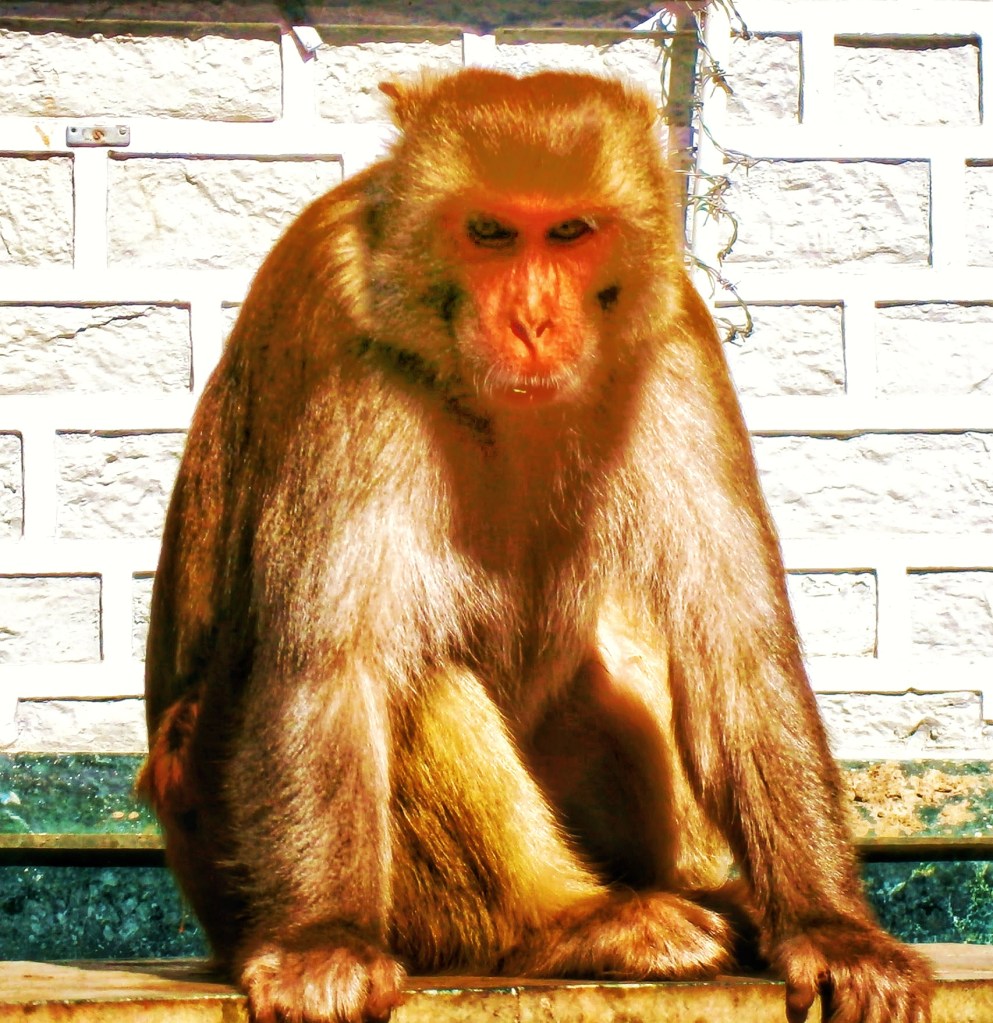
We enjoyed the walk, avoiding the grey monkeys – the vicious ones, and trying to get close tothe brown monkeys – the cute ones.
At the gates of the temple were a couple of men standing by a large pile of long sticks. Initially I thought that they were trying to con us into buying their sticks by telling us how dangerous the monkeys were. Then we heard some shrieks from inside the temple grounds and realised that it would probably be best to pay the few rupees to rent a stick to keep the monkeys away.
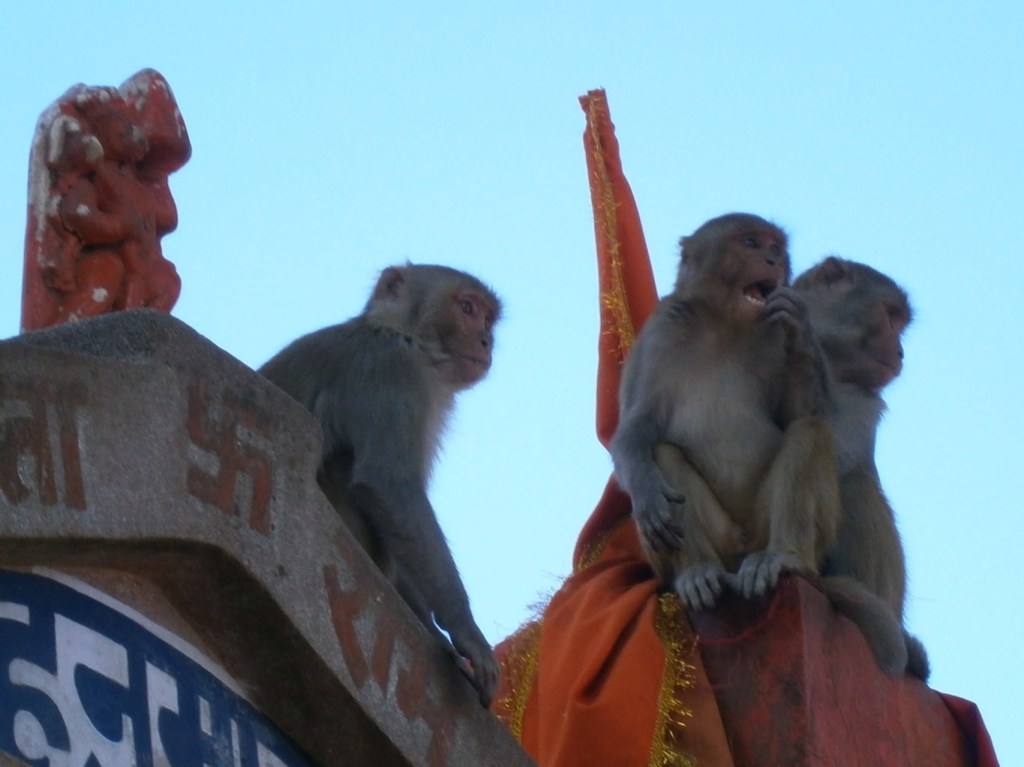
On top of every building the monkeys sat and stared down. In the temple of the monkey god there was no question as to who was in charge.
As I remember it, the legend was that Hanuman came down from the heavens and landed on top of the mountain and flattened it. This is where they then built the temple.
There were a few brightly decorated buildings all shrines to Hanuman and the grounds were kept up to an immaculate standard. But it was all about interacting with the monkeys.
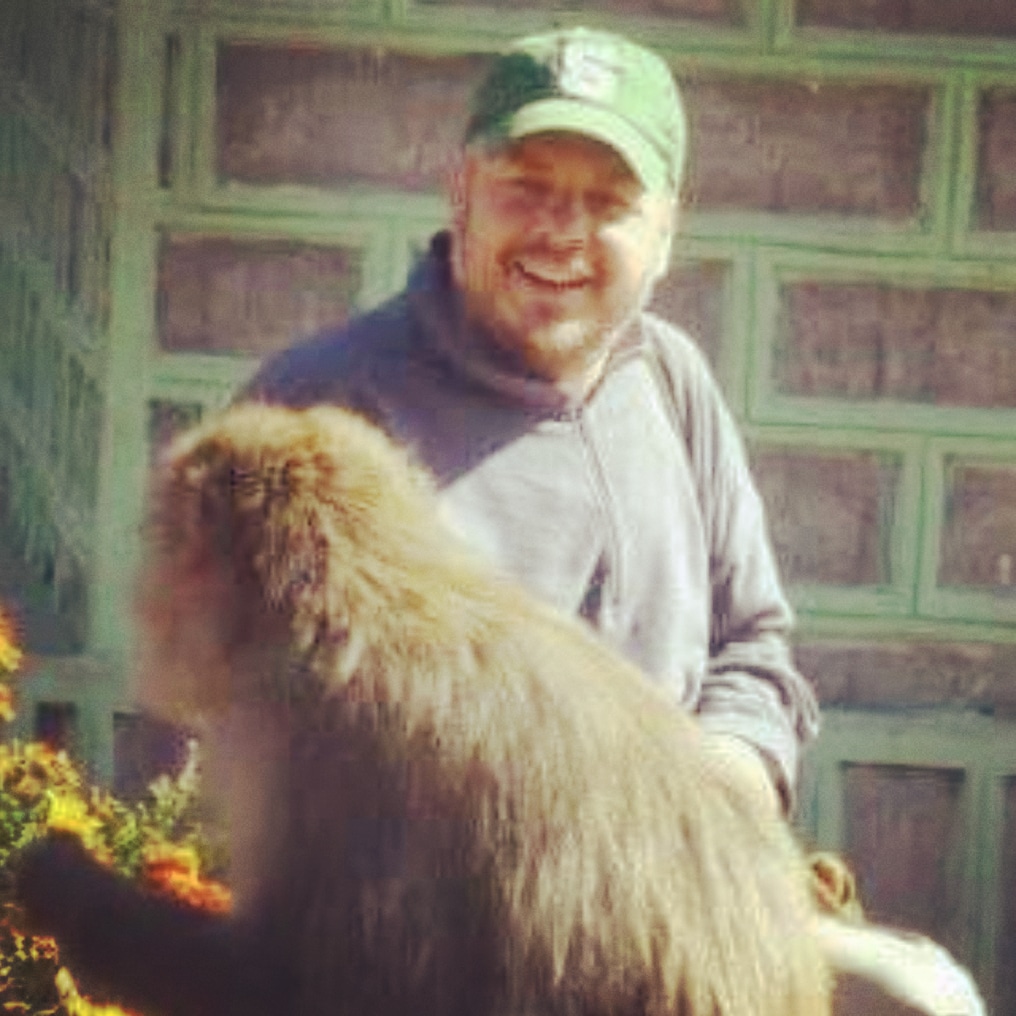
One of my favourite photos as I sat next to one of the locals.
At the gates we were offered some long sticks for a few rupees by two men. Usually you would try and ignore the street vendors, but their unique selling point was that you needed the sticks to keep the monkeys away. And they were right.
The monkeys got curious, or hungry, and would approach you. A quick tap of the stick on the ground and they would sprint away. These monkeys were not as intrusive as those of Gibraltar, but you had to be vigiliant.
There is something about interacting with animals like this. Maybe it is because they seem exotic to us, or something we only see in cages at the zoo or on the television in wildlife documentaries. But it was fun to walk through the immaculate grounds of the temple and see how themonkeys had taken charge of every building. I suppose it was their temple so they had every right.

We enjoyed our time at the temple. The trip could be classified into the arduous and the enjoyable. Here we were tourists, taking photographs and having a new experience.
Eventually we moved on, heading towards the Viceregal Lodge. As we across the top of the ridge we encountered on of the larger grey monkeys. With its fangs flashing it ran straight through the group. It had no fear of humans.
Shimla was where the British governors and diplomats would come to during the heat of the Delhi summer. It was more bearable and so became an important place. They built the Viceregal Lodge, a magnificent if not Indian building.
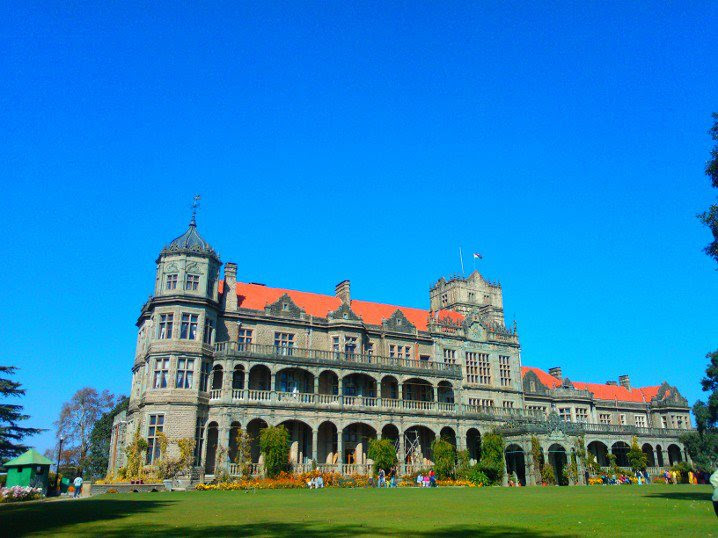
Here, on the edge of the Himalayas, is a building that should be in the grounds of a National Trust venue somewhere in England. The British did not make any compromises with their architecture in Shimla. Everywhere you look there is a building in the Tudor/Elizabethan style, or 1930s home counties.
It was a magnificent building inside and out. It linked two parts of my life. It was the residence of Lord Mountbatten, the last Viceroy of India, who also had his family home in Romsey, Hampshire. That was the town where I grew up and used to spend time in the farm next door to Broadlands, his home. Being here in India had evoked memories of being a child. Secondly, this was where the negotiations had taken place between the British government and Gandhi about independence. Not for the first time on this trip I was walking in the footsteps of Mahatma Gandhi. I was more in awe of being here because of his connection than the building itself.
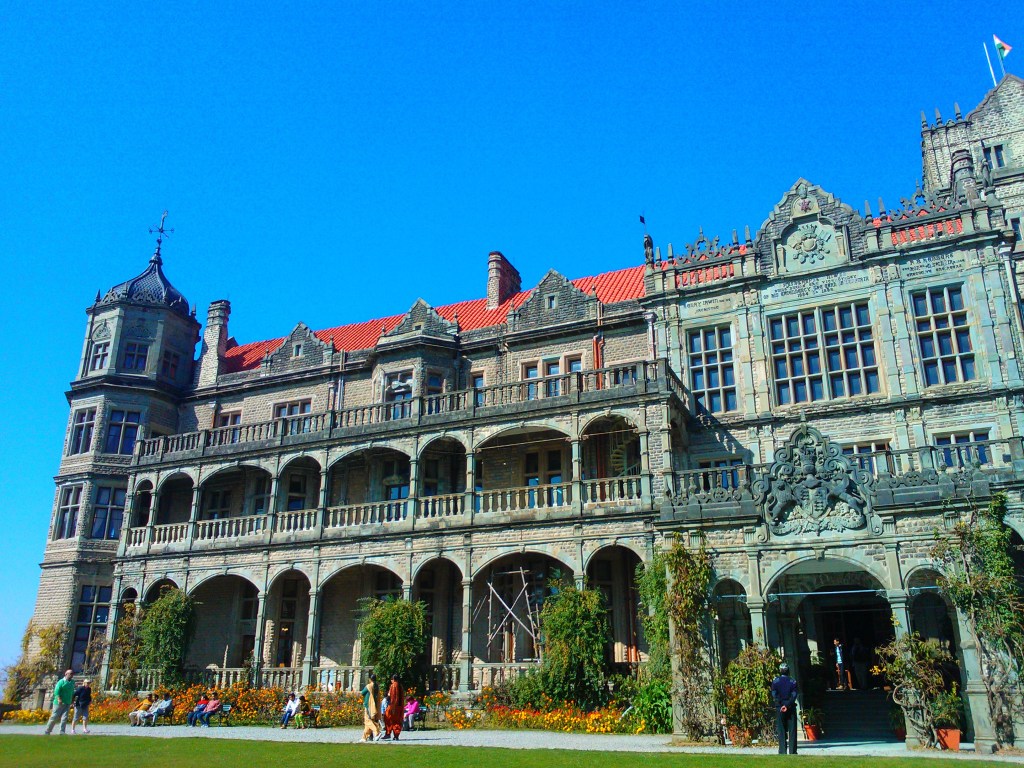
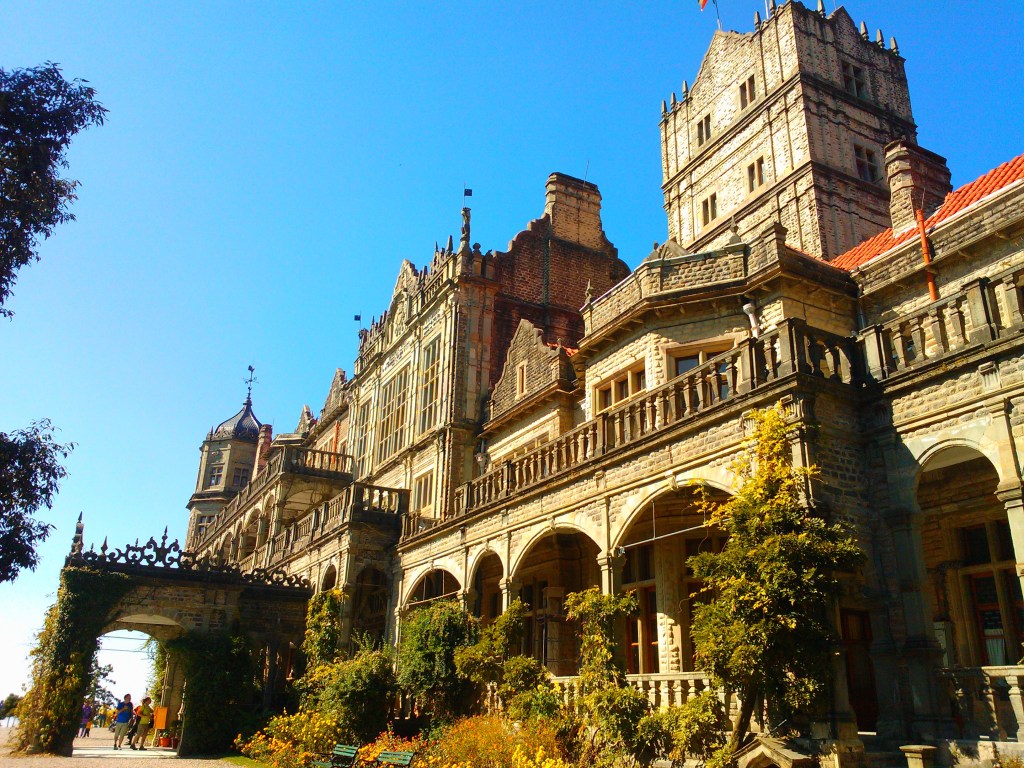
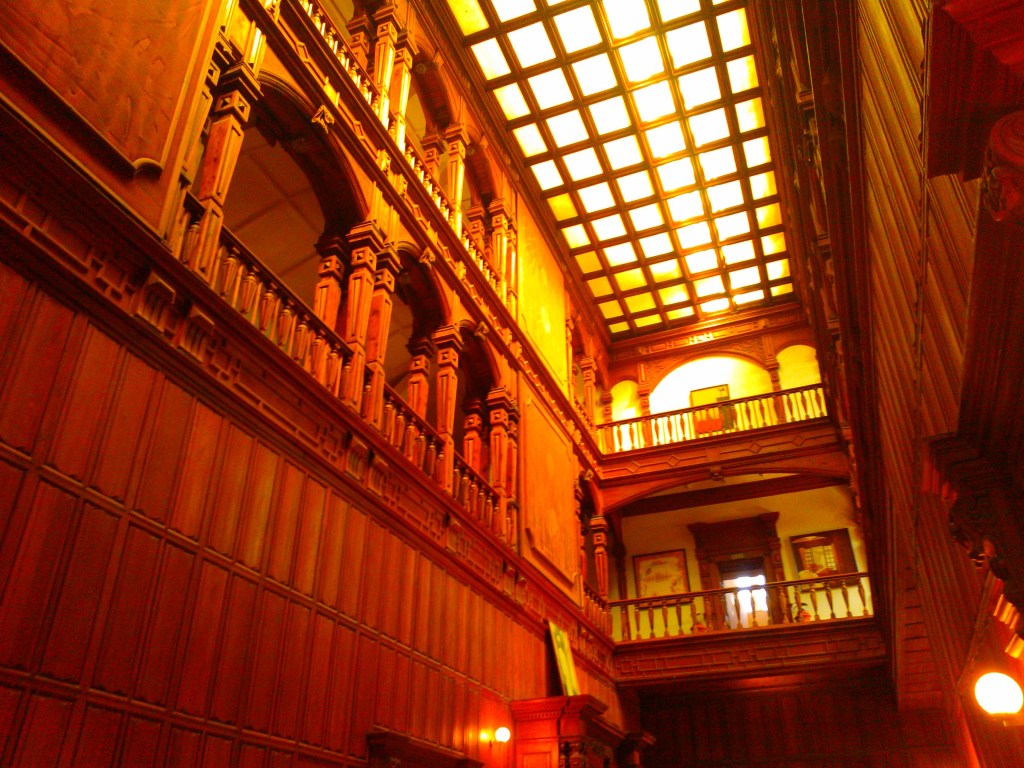
It was here that Gandhi sat with the British and negotiated independence. There are photographs of their meetings and it is one of the few places where the British history within India has not been whitewashed. I do not mean this as a bad thing, but it was noticeable how some buildings that had become British residences had no record of them ever having been there.
Monkeys, temples and history. Not a bad start to the day. And then we got adventurous.
We had seen signs to a waterfall, so we headed out of the Lodge and into a forest, floowing the signs.
The trees grew thicker, the road became a dirt track, but still we saw the signs so we kept walking. In the middle of nowhere there was a small hut selling drinks and crisps. We filled up, but I could not help but think how a bottle of coke could cost the equivalent of 18 pence. SOmething about the global economy I suppose.
Down we went, no sign of a river. The track zig-zagged and with the sun starting to dip we realised that we were not going to find a waterfall. And we were in a forest on the side of a mountain a long way from the town.
We did not know what to do. We had to trek our way up the track and hope to find some signs back to civilisation.
Or, we could wait by a bus stop in the middle of nowhere. There was no timetable and we had not seen any vehicles for an hour. But as we debated whether or not there would actually be a bus… a bus appeared on the track coming towards us! In the middle of a forest. On the side of a mountain.
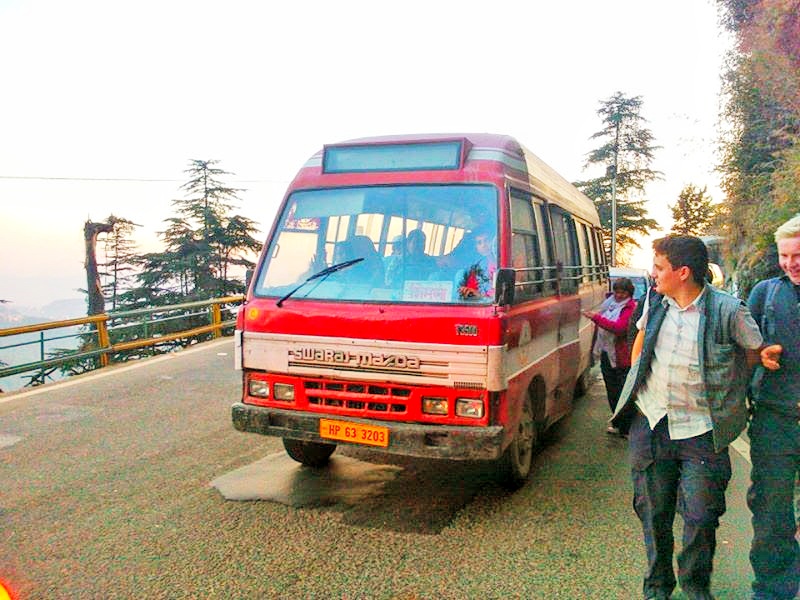
It had saved us. It also demonstrted some of the bureacracy of India. The driver sold us tickets and we had to stand. How was the bus so busy? There must have been another town at the end of the track. At another stop two men got on and wanted to count the money that the driver had taken. They then asked to see all our tickets before they got off.
At the top of the track another two men got on and repeated the process. Maybe different people owned sections of the track and took a fee for everyone who used the bus?
But we had made it to back to Shimla.
 Reluctant travels in India
Leave a comment