We left Delhi behind and travelled through the night to Kalka. Fatigue got the better of me, we had seats booked as the trip was meant to be in daylight, but the eight hour delay meant it was deep into the night.
A very long day, having arrived from Agra, visited the slums and then sat on a train platform meant I slept for the whole trip.
Looking it up now it was about six hours, of which I have no recollection at all. It was first light when we arrived in Kalka, the train station that leads onto the foothills of the Himalayas.
The air was already cooler. Different to anywhere else we had been in India. I had faint recollections of the heat and noise and heat of the air in Delhi. This freshness, for the first time in eighteen days felt a bit more like home.
A quick history lesson: the intense heat of Delhi meant the British built a town in the north that was a lot cooler in summer. From there they would have all the administration departments to run the country. At an altitude of over 2000 metres above sea-level, a railway was constructed between 1898 and 1903. It has 20 picturesque stations, 103 tunnels, 912 curves, 969 bridges and constant climb around the mountain.
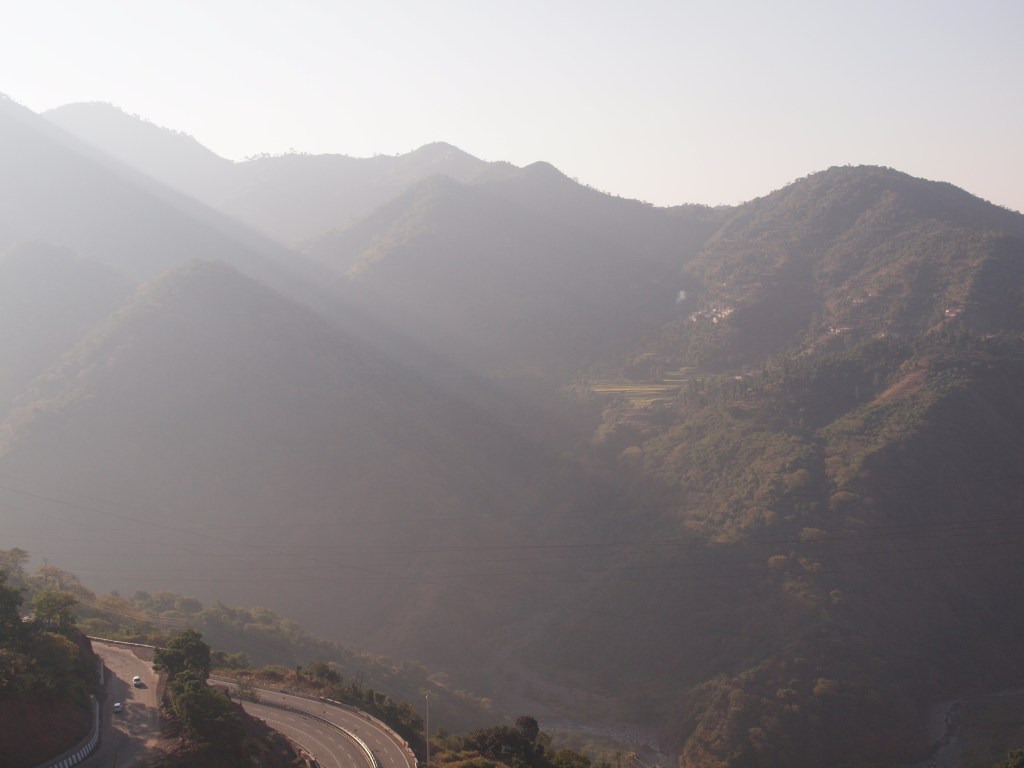
This was a different India. We glimpsed the mountains in front of us. Whenever we had a clear view we could see higher peaks beyond, and then higher peaks again. It was on these furthest peaks that we saw the snow, not quite able to grasp what it was like on top of the world.
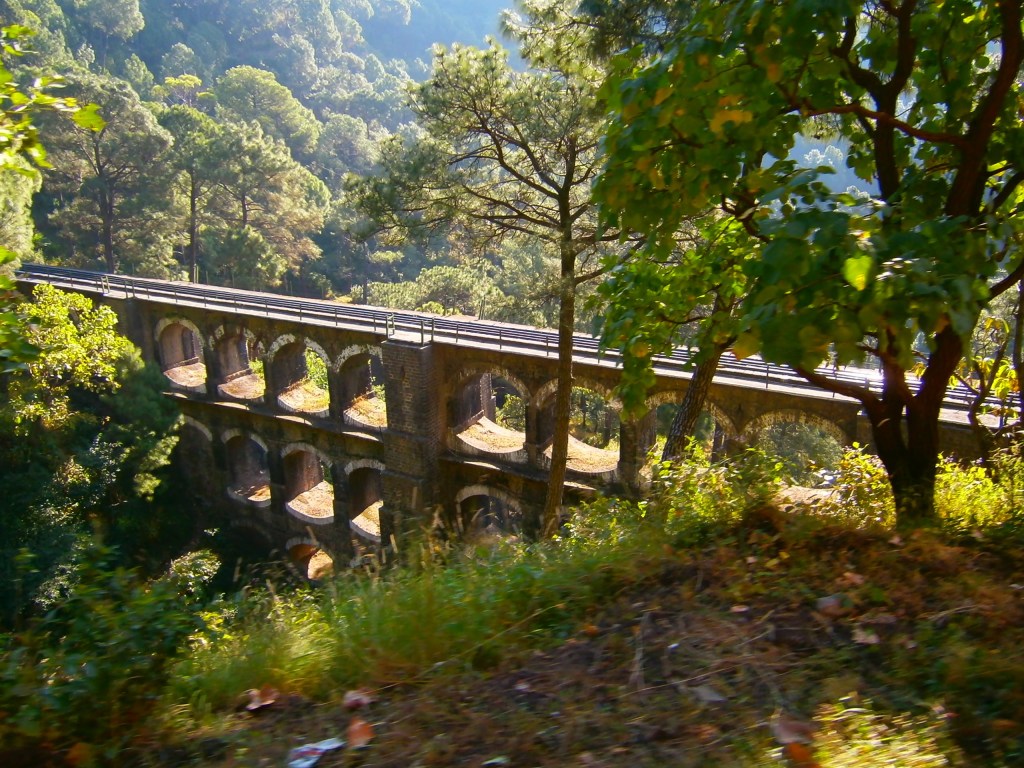
One of the many bridges.
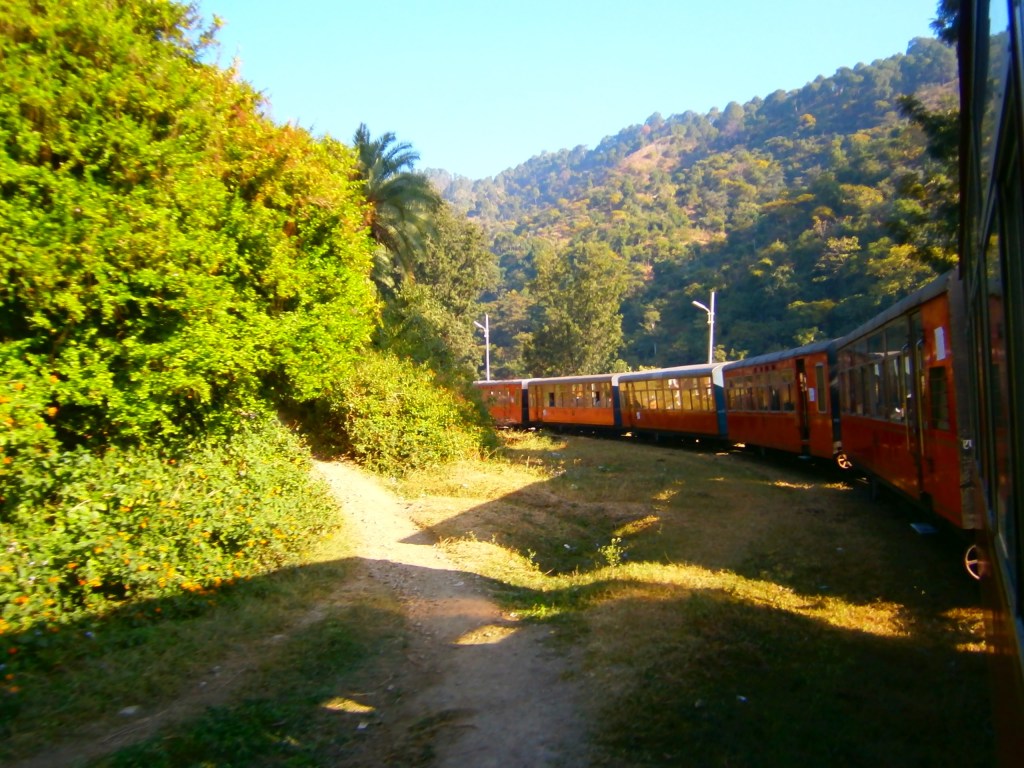
At every bend we got a new glimpse of the hills, always climbing. Stations, brightly painted, came and went and still the train moved forward.
Eventually the thick woods gave way as we moved beyond the tree-line. This was a landscape that I have never encountered before. It was unlike Delhi, this was the beauty of nature, a wild landscape and more importantly shades of green.
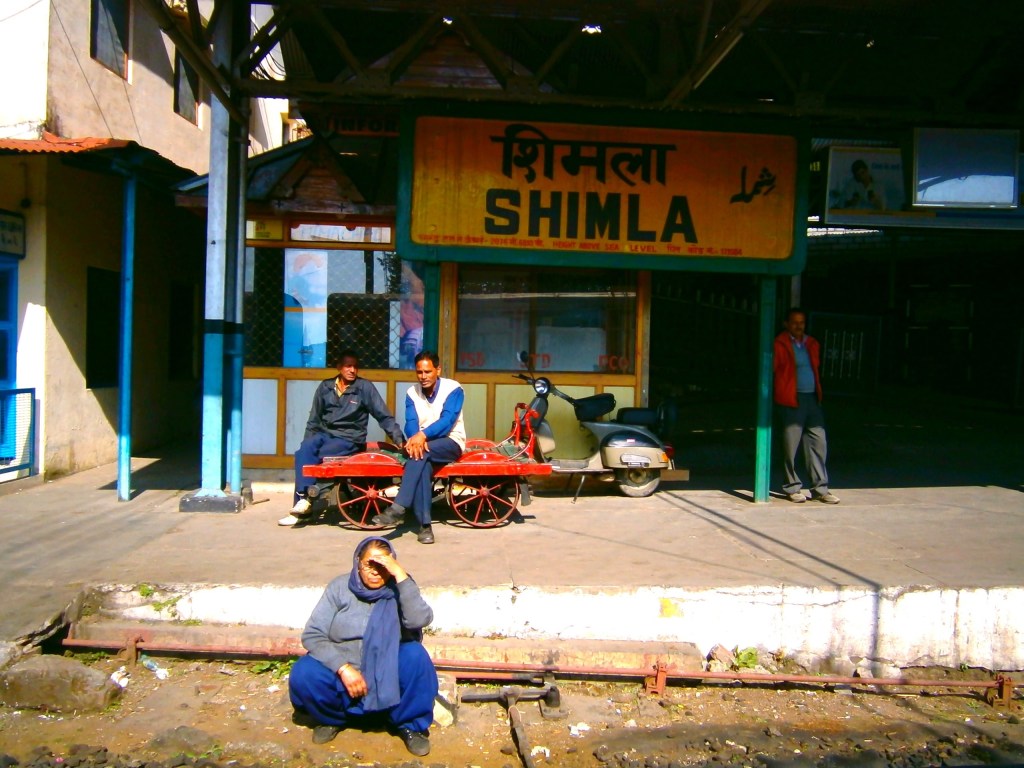
At the end of the line was the mountain station of Shimla. In the cool air people sat on the simple platform waiitng for the train. We had read that it was important to use the porters as this was their only income.
We unloaded all our bags and gathered on the platform as others rushed around us and the porters circled. Opposite the platform we could see across those mountain peaks. This was a journey worth making, no amount of tiredness could make this a wasted journey.
For the first time in over two weeks wearing a tee-shirt meant you felt the cool air. It was still pleasant, but this was the crystal-clear air of the mountains.
The porters gathered up our bags, a guide from the hotel met us and we set off up the hillside, through the town. The architecture was a mix of the Indian buildings and the original British buildings. There would be buildings that would not look out of place in a town in Surrey. Take a British town, place it in the Himalayas and allow an Indian town to be built around it.
We arrived at our hotel. Except it was not our hotel. The guide was not OUR guide, but a ruse to get us to go to another hotel. We asked a passer-by for new directons and we were soon at our final, new hotel of the trip. This was the Hotel Sukhsagar.
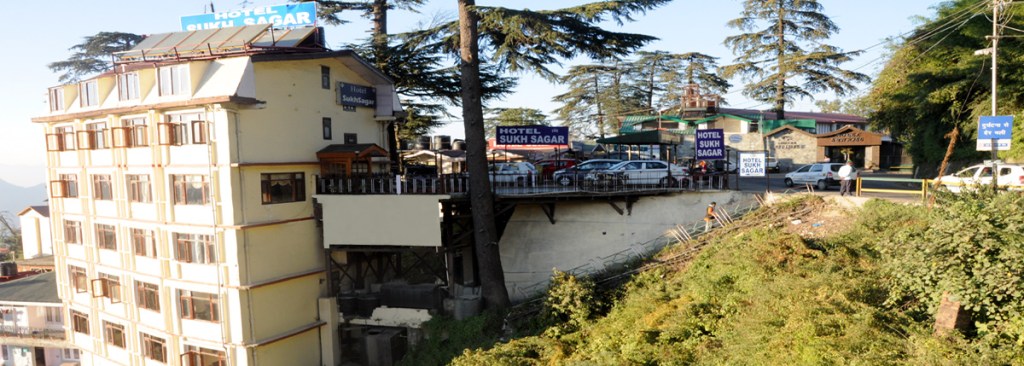
It was comfortable enough and I was determined to relax for the final few days. I knew we would be returning home soon, this was the last stop in India, it was so remote that I knew it would be a once in a lifetime experience.
A chance to wind down. Surely India had no more tricks left?
 Reluctant travels in India
Leave a comment