We were met at the station by Jimmy from the Asha Deep Foundation. He was a ‘jolly, larger than life’ man, an instant friend who made you feel welcome. His contagious smile and laugh was comforting .Boarding the old yellow bus we moved away from this area towards the Foundation’s Centre.
The roads became narrower, in every building there seemed to be a small business – a bundle of tyres, wire rope, motorbike parts. People sat in front of their small shops, the heat of the day was rising and a big yellow bus full of westerners was receiving some attention.
We weaved through the streets and the buildings and it became more claustrophobic before we arrived at the gates of the Foundation. Like a film set, the large gates were opened and we drove into the yard. They were hurriedly closed behind, keeping the onlookers out.
It was a large courtyard surrounded by off-white and faded yellow buildings. From what we had seen in India they were in good condition. I got the impression that houses in India are constructed up to the point that they can be lived in. Once you move in, it does not matter what state the property is in, no more work is done. That’s it. If the roof is not quite finished, or painting not completed – that’s not important. If the electric wires are dangling down across the street – that’s not a problem. Everything seems unfinished, as if they will come back another day, but that day never seems to come.
We were met from the bus by Jothi, who runs the Asha Deep Foundation. An imposing and beautiful woman, sparkling with intensity and purpose. She wore a brightly-coloured sari and had the look of someone who was in charge. I respected her from the first moment I saw her, she was put on this planet so that those in need would have a chance.
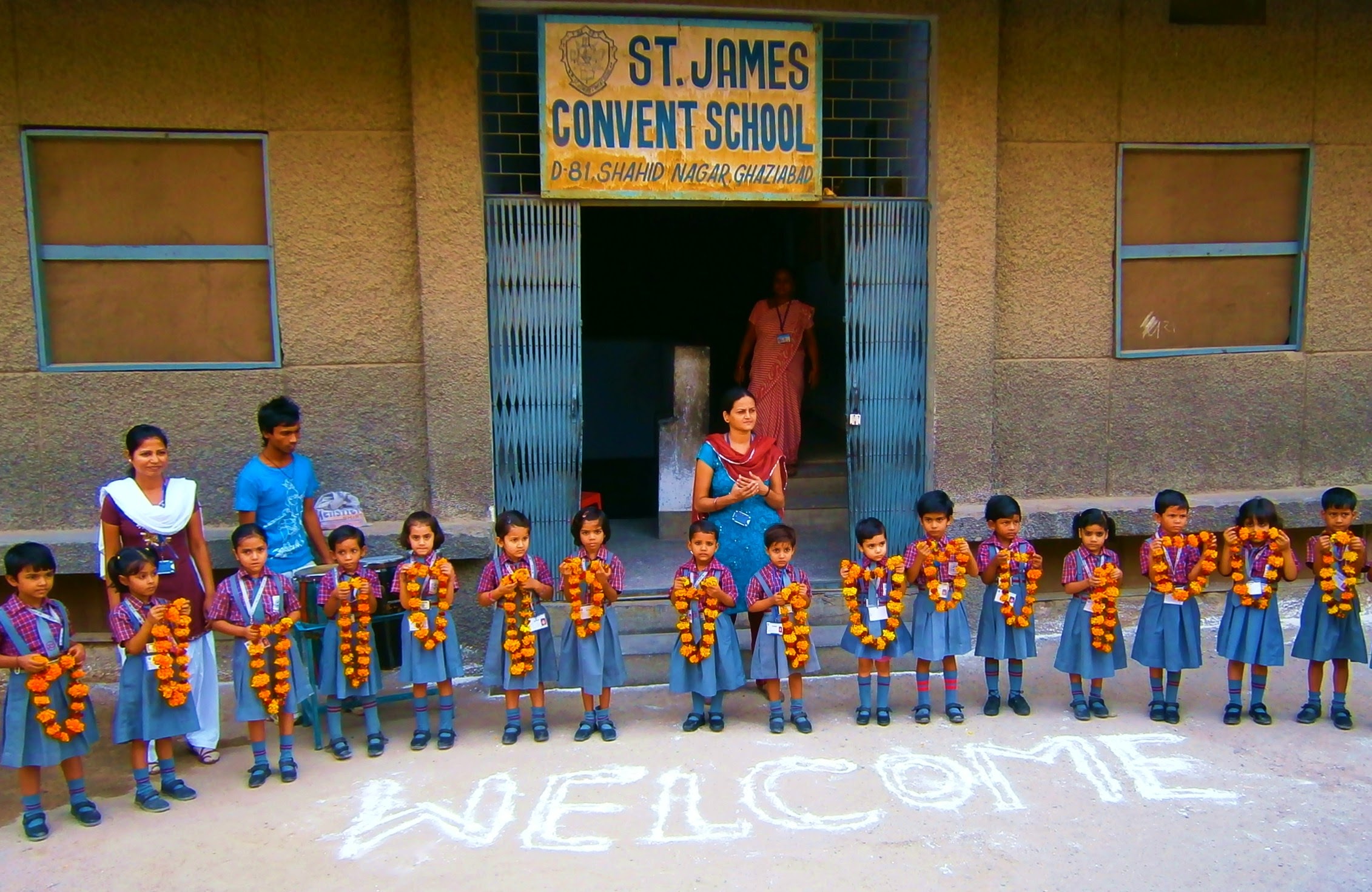
She greeted Gilly like an old friend, they had obviously met on the previous trip. For me it was an introduction and I strangely felt the aura of her. She greeted the students off the bus and we were led to a line of 3-4 year old smartly uniformed children who held out the orange marigold garlands that they would place over our heads.
It was quite a greeting as we stood behind the children to have our picture taken. A line of westerners in the courtyard of an Indian orphanage standing behind the orphans. The Asha Deep Foundation know how publicity and marketing works. But, they exist to raise funds for their charities, from the eldest to the youngest.
From a roof top we looked over the slum areas in front of us. From this height, it was a different part of the city – it was all new, again. There were streets full of piles of rubbish, people moving among them. Stray dogs wander the streets and children played cricket on a dusty, dirty square. It was peering into another world, another society. The Foundation stood like a fortress, but also a beacon of hope.
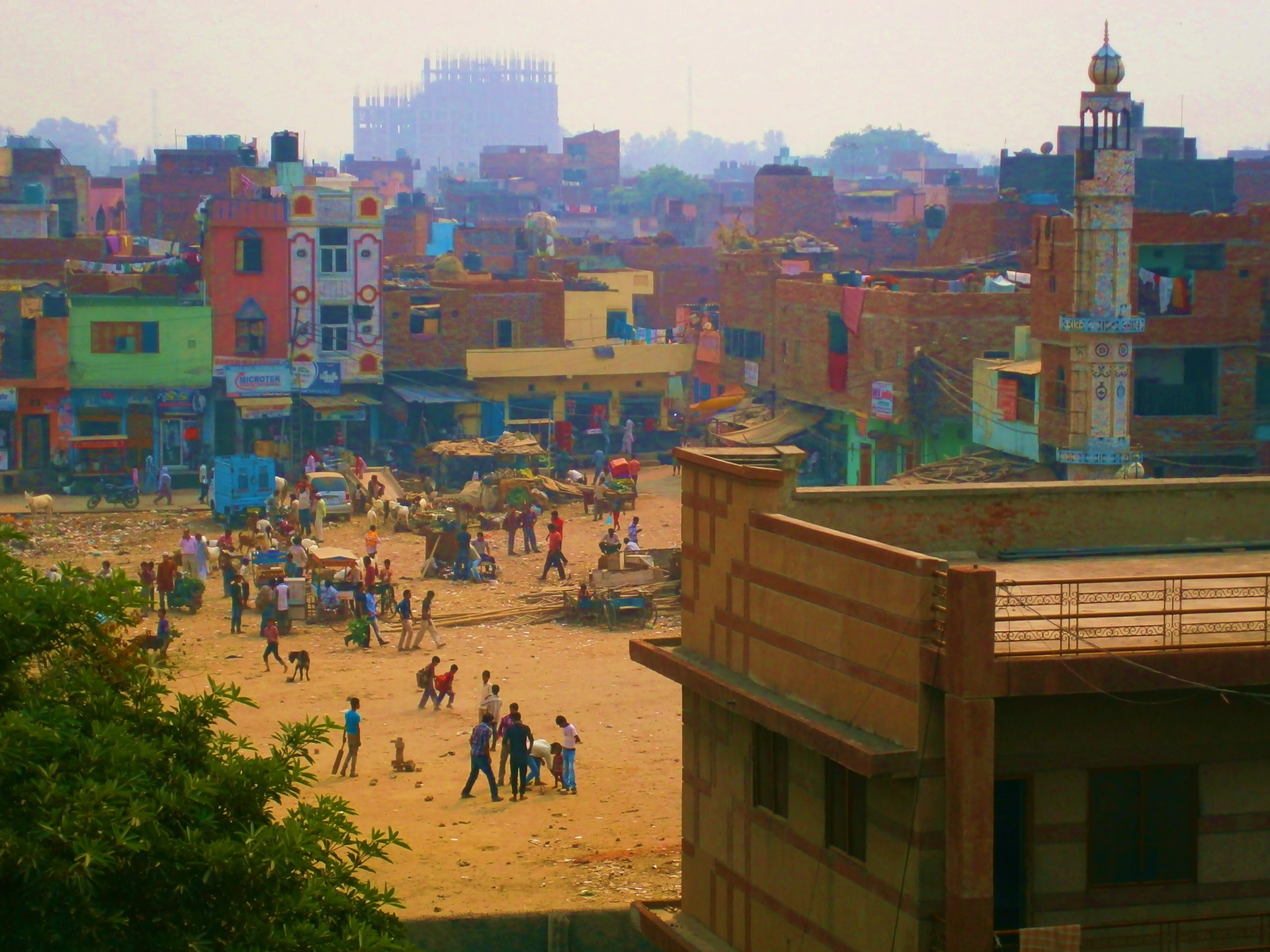
I think that seeing the slums and the poverty from above gave us a perspective that we did not get on the drive from the Metro station. At ground level we saw snatches of people’s lives, here could see how they were entwined and inter-dependant.
We were taken into the slums.
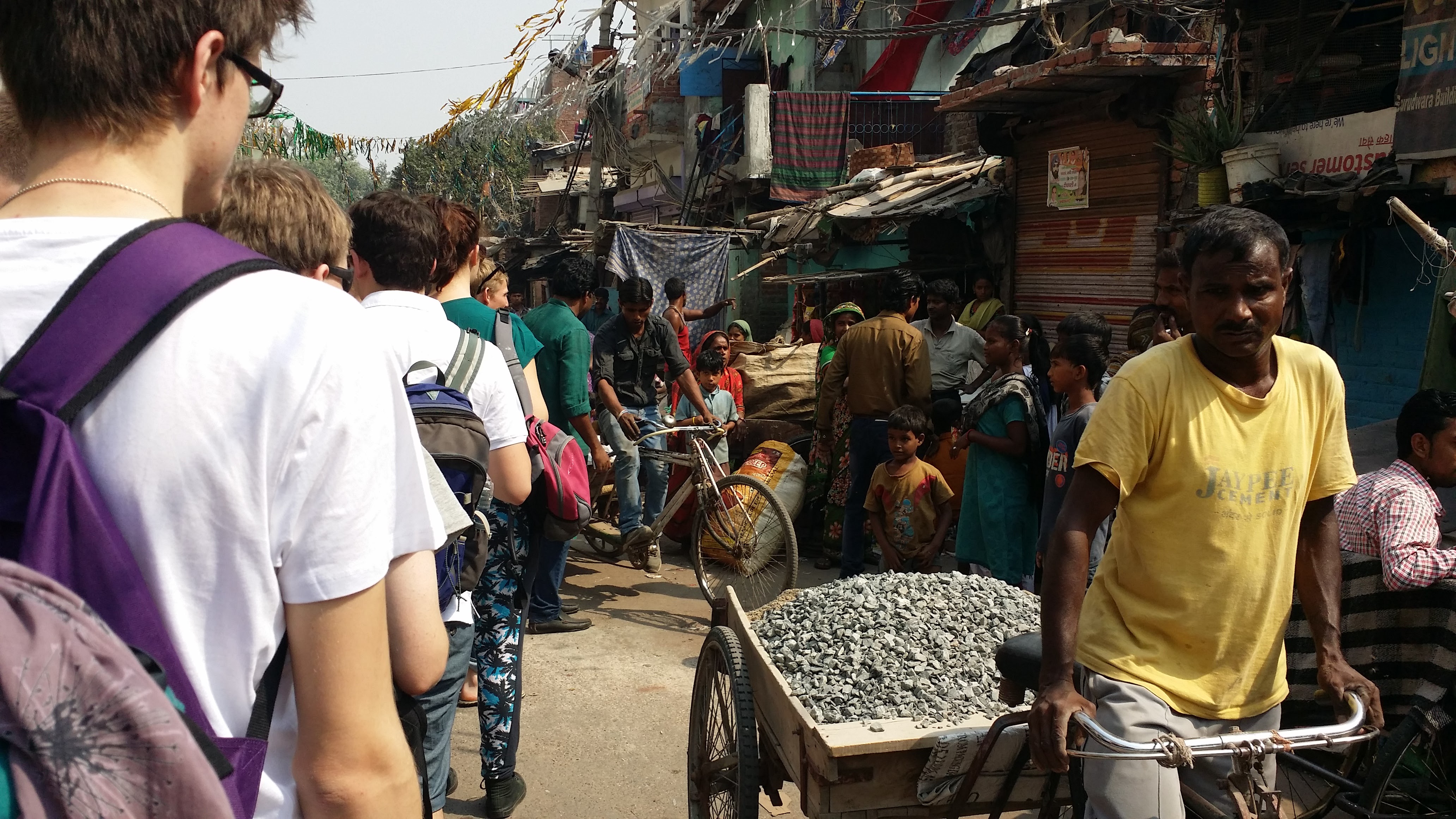
Jimmy started us in one area, we walked through the middle of a claustrophobic street. The square block ‘houses’ faced each other across a short distance. The ‘street’ was dusty, a small channel in the middle took all waste away, human waste. There were electric wires hanging above the streets, criss-crossing and entering the buildings.
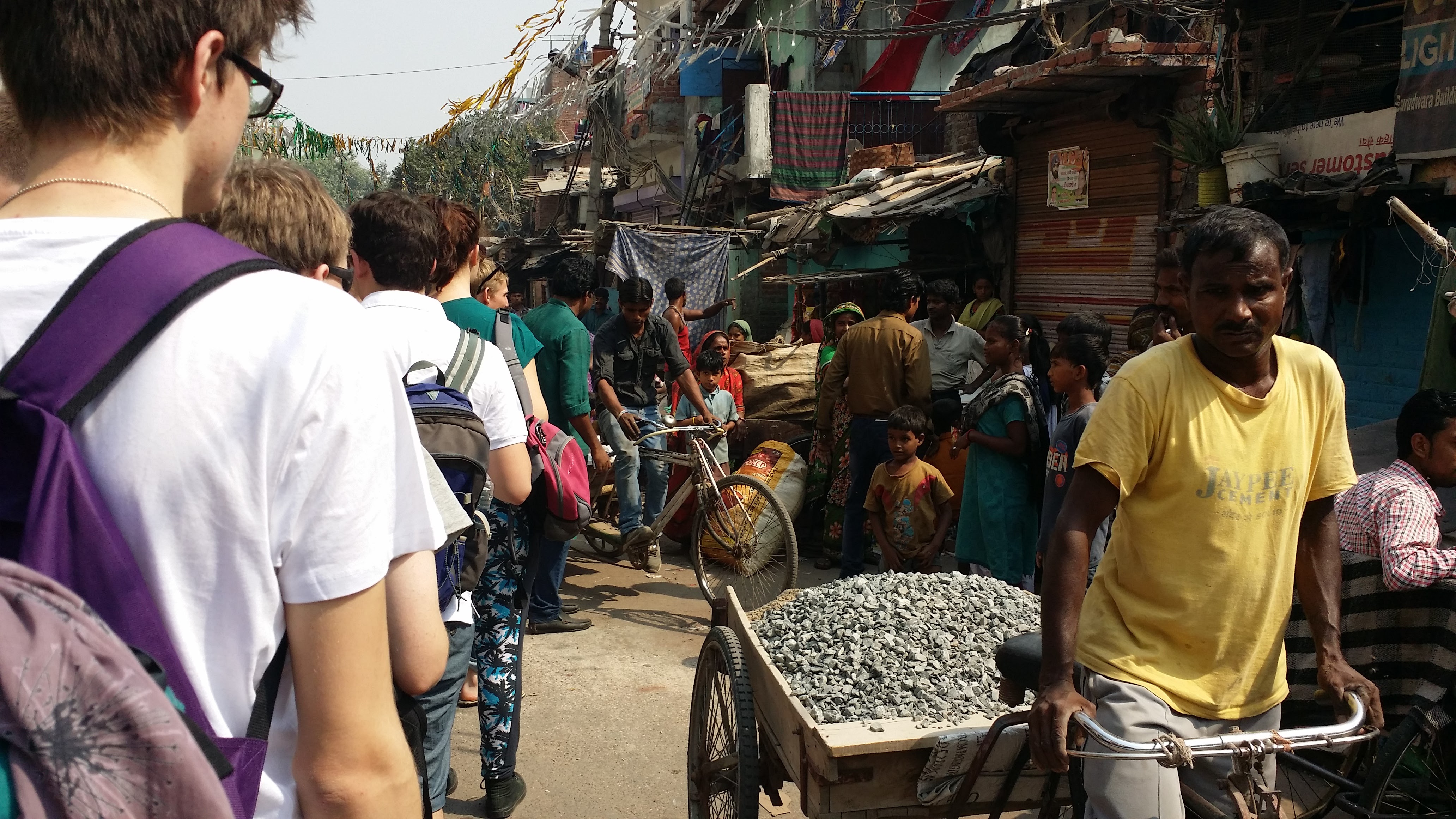
We were told to keep moving, as crowds would gather around us. We were transported between sites in several cars, there was no space for the bus.
Walking in a single line we peered into the small units. Typically, there was a small single flame burner by one wall. Matting was on the floor, the rooms were dimly lit and boxes were pushed to the walls. They were square, with thin mattresses pushed up against the walls. It was noticeable that where there were beds it seemed that men would be sleeping, or lying down, while the women worked. This was the reality of slum living. A small, functioning space. An existence.
Yet, people who live in the slums (or at least the ones that we encountered) are not unhappy. They do not think that life has treated them harshly. They do not think of those living in cleanliness and prosperity. You survive. Each day is about survival. Having enough water, food and shelter to get through a day and wake up in a new one. Almost the opposite of western life with our mortgages, savings plans, extended fuel tariffs, pensions, wall calendars etc., etc.
Until you look into the home of a slum dweller you do not realise fully the injustices of this world. India is an unjust society, it does spend money on projects so it will be recognised as a modern country, wealth does not trickle down to these people. But, while there are people like Jothi, and organisations like the Asha Deep, there is absolutely no reason why we cannot give a little to support them. We have to do so to retain our status as humans with dignity.
With an understanding of the slums we were led up some dark stairs between two buildings. Sitting on the floor in the dimly lit room that greeted us was a class of young children, 6-7 years old seated on an old carpet with a young female teacher holding a book reading to them. On the wall were posters, cartoons with numbers and simple words on them. It was gloomy, yet here was light in the middle of the slums.
Our students moved and sat with the children. I was more interested in the teacher, what makes someone come and teach here? Jimmy explained that the young teacher would live, eat and sleep in this room. There was a wooden box, covered by a blanket in the corner that would double up as a bed. It was seen as a good opportunity for young women to gain experience as teachers, and they were given accommodation as well. I could see how this worked, but the salary was £30 a month. It made me question our roles as teachers, the primary role of a teacher is to want to help improve the life of the student in front of them. Our job is to give them the skills and qualifications so they can have the best possible life – but they do have to meet us half way.
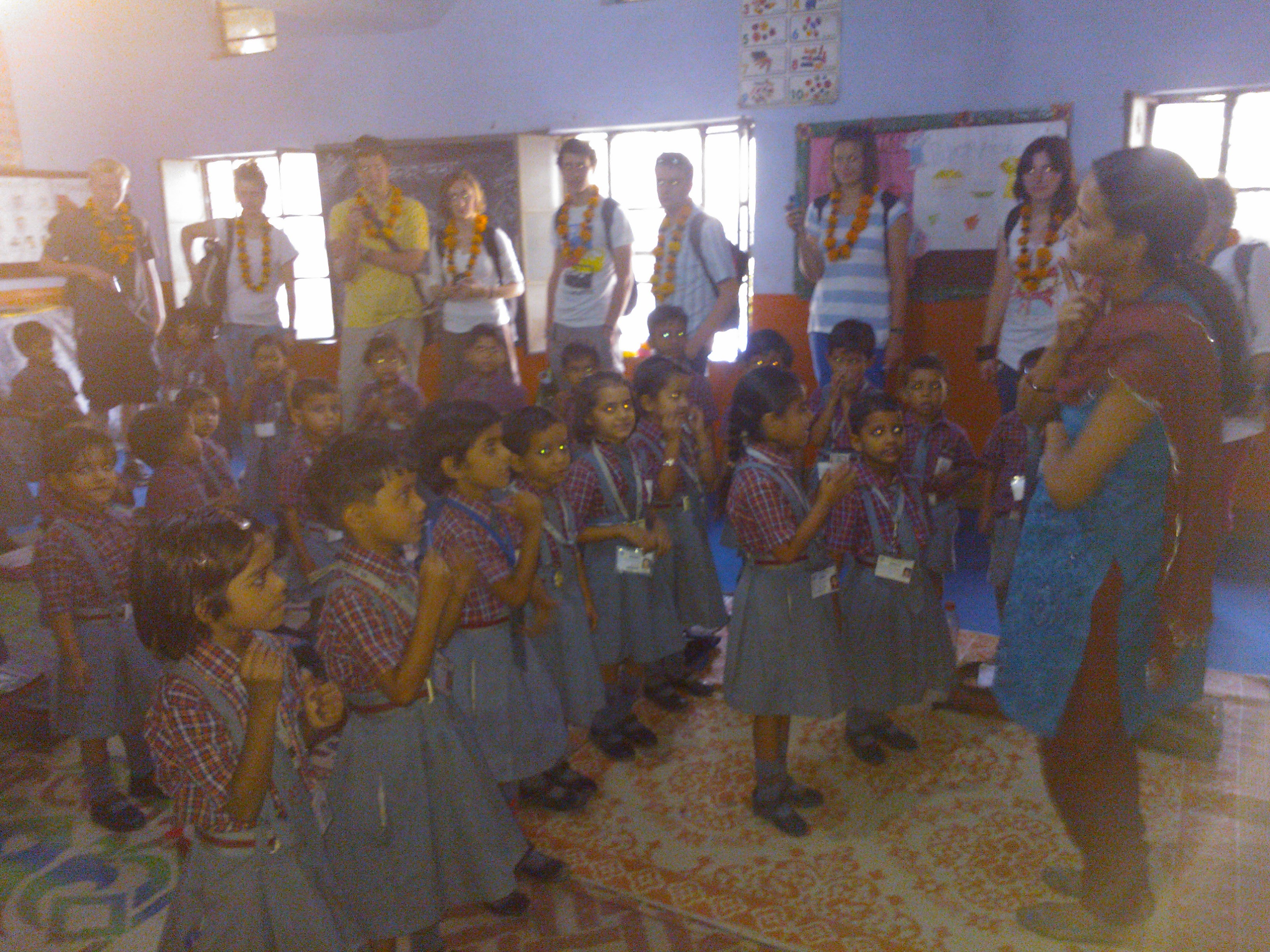
We were shown a small savings bank that the Asha Deep Foundation had set up. It was to encourage the children to try and save so that when they needed help with applying for jobs they would have access to funds.
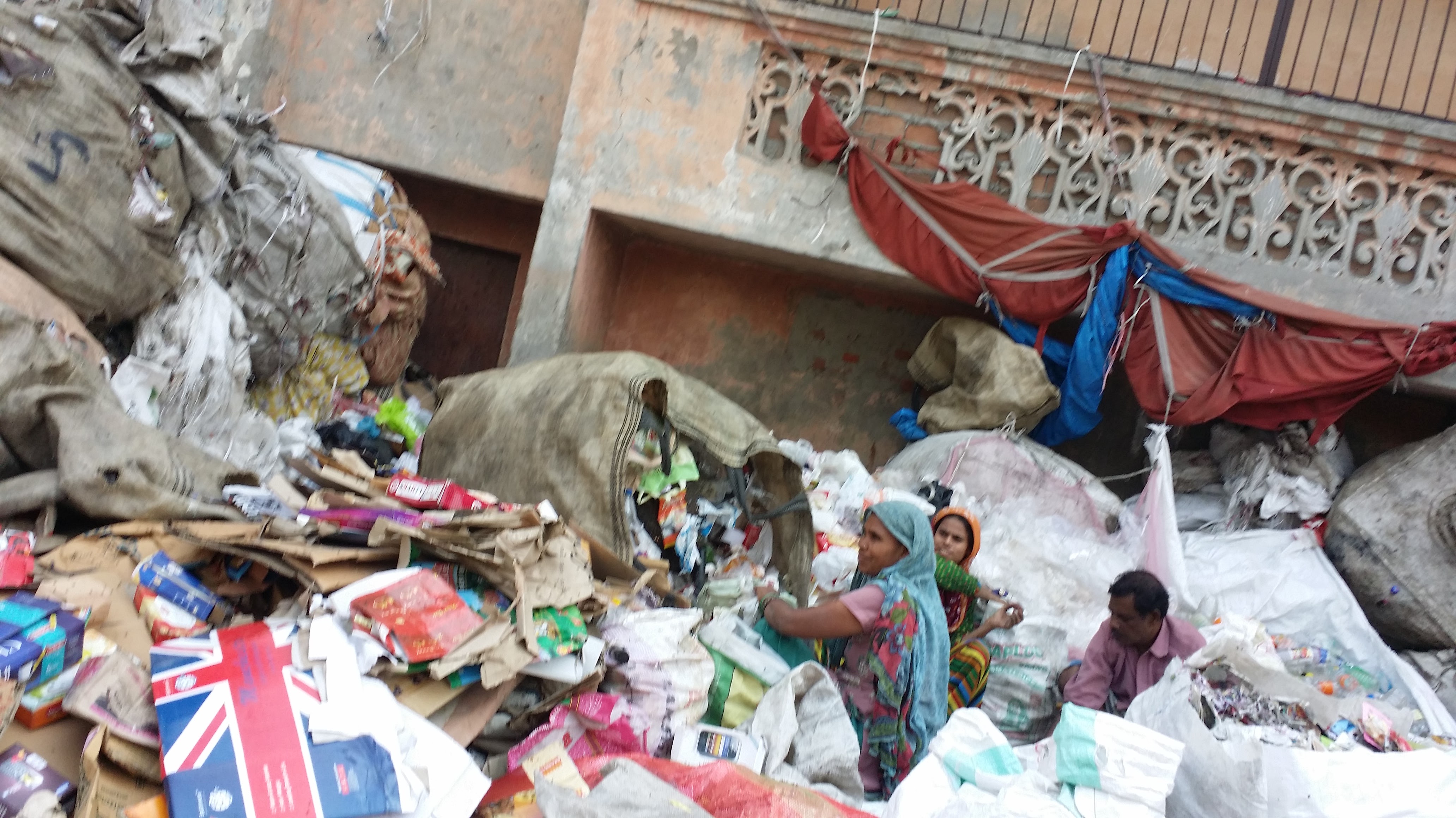
The backdrop to this is that I was told that each child in the slums had to `rag pick’ – the system of picking through the rubbish looking for anything that they might be able to sell. Delhi is one of the largest cities in the world, but does not have a system for removing and processing rubbish. It is dumped in the slums where it is then picked through by the men, women and children. Cotton, plastics, metals – a great filtering system that forms the basis for life in the slums.
We walked with one of the young girls to her home. She was so proud of her light blue uniform, but the reality of home life was a small room, shared with her family…and a goat. After school in the morning she would then change and join her mother in the piles of rubbish outside their room, in the middle of the street.
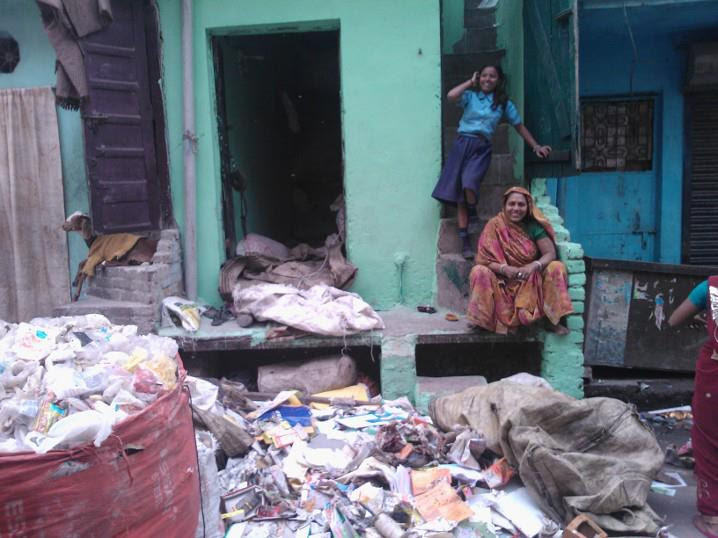
35 pence a day. 40 cents in europe. 44 cents in the U.S. That is what a child has to find in waste to then be able to eat that night. They don’t always find enough so go hungry. Imagine giving up a couple of hours to go to school when you could be out trying to help your family find the scraps that will help you to survive. It’s easy to imagine what goes through the mind of a hungry child or a hungry mother. And yet this is why the Asha Deep Foundation and others are so important. This cycle can only be broken through education, allowing these children the opportunity to be able to apply for real jobs, to be able to help their families. A real way of tackling this poverty.
It’s all about looking into the eyes of the children. When you make eye contact you realise that we are all the same as humans. My existence and their existence is shared, we live on this planet together and the unfairness of it all hits you hard.
We walked on and came to another small school, we climbed the steps, but this time the classroom was closed, it was never properly explained why, but we had to shuffle through a corridor and a door was opened onto the roof. We stepped across some corrugated iron, and there on the roof a teacher was sat with her class. The desire to learn was obvious, and this demonstrated the determination of all concerned.
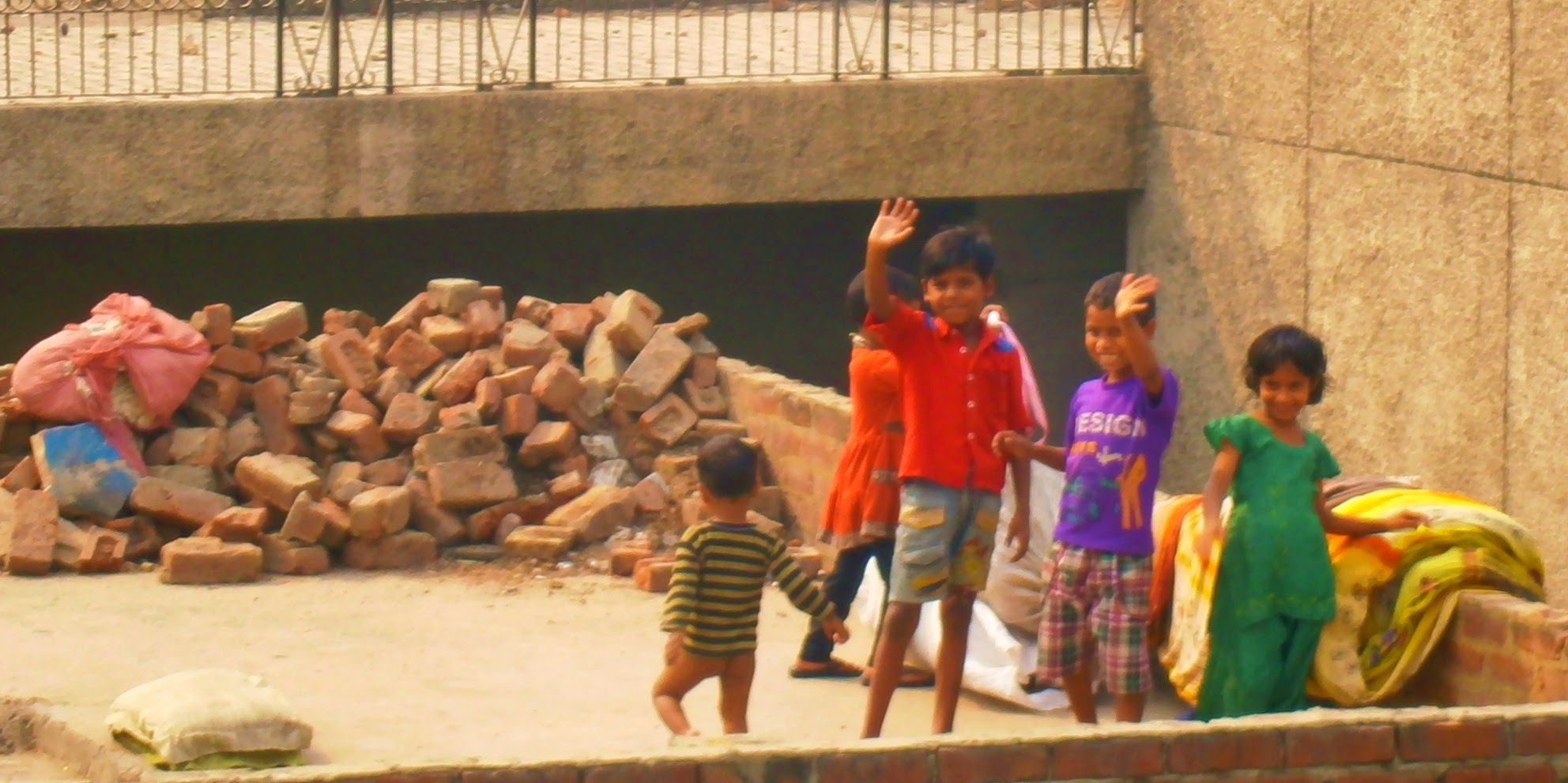
On the opposite roof were some children who suddenly became interested in the group of westerners who had suddenly appeared. They created a lot of noise and were shouting and waving across. In a city of the haves and have-nots, were these the children who would never attend school, would never have an opportunity to escape? But as I have said – they were not unhappy. There seemed a genuine joy to be interacting with us. It was confusing, it was unsettling and it stays with you for a very long time.
We returned to the Foundation and were led through several buildings and were treated to lunch.
When you are offered lunch and you have just been touring the slums it is a time to stop and think. You think a little bit harder about what it means to be a father of two children.
The room was dimly lit and sparsely decorated. There was a large rectangular table that we could all sit round. Jimmy was at the head of the table – the perfect host. You could not help but be entranced and entertained.
To some it was a welcome relief, but I wanted to ask questions, I needed to get my head straight.
If there was a positive to all this it was that I had stopped thinking about myself. My worries were insignificant against what I had witnessed this morning.
The food came in, carried by two elderly ladies dressed in their simple white saris. There were large metallic containers filled with vegetarian curry, dal, rice and chapattis. A simple meal, but it was important that we ate well to show our appreciation to our hosts.
I watched Jimmy’s cheerfulness. How do you work day in and day out with the poor, those challenged by mental and physical disabilities, the young, orphans, the elderly and the ill? All disadvantaged in a place where pure survival was a triumph of the human spirit. What makes someone so well educated want to work in the slums?
There were plenty of Christian posters and the Foundation is a Christian institution, but I did not really witness this during the day. I asked Jimmy if the faith of the children was important, his reply was that they would help anyone that needed it. Did they meet resistance from those of other faiths? Sometimes they did. Were other faith groups operating the same type of education and outreach? No they were not.
This was my first experience of religion at this level and practicality in India and my later experiences would slightly change my thoughts on different religious groups.
After lunch we stayed in the orphanage. The children we had seen in the morning were the ones who had parents and worked in the slums. Now we toured those children who were found in the slums and lived in the orphanage.
Our students were again magnificent. Every classroom we entered they were invited to interact with the children and they willingly did. We moved from the youngest and those with learning and physical challenges through to the sixteen year olds who were on the verge of moving on.
I think that the meeting of young people of the same age was fascinating. Did they share hopes and dreams? They had spotless dormitories and at the end of their beds was a simple wooden chest. I suppose everything they own in the world was in that chest. And yet these were the lucky ones, being given a chance in the world. But I was not going to be able to forget that fortune for them meant one box of possessions.
That 35p a day stuck in my head. So many things in such a short amount of time that would stay with me forever. In the final classrooms we saw what it was all about. Teaching young people skills that would give them a chance in life. From the youngest children being taught skills with their hands and given a good education to this – young girls from the street, abandoned, now able to make clothes, jewellery and become henna tattoo artists. Weddings can be very lucrative for the best girls. The boys learnt bicycle or motorbike mechanic skills. Proper skills to gain proper jobs, things we take for granted.
Just consider what real charities can achieve. Giving money to street kids may or may not feed them – it is most likely to go to gang leaders. Giving money to those who work with street children can help take them off the rubbish heaps and this in turn lifts communities.
Our last function of the day was to sit in a large conference room while Jothi gave a presentation to the students.
Individual students from the Foundation were brought into the room who had been sponsored by the last trip. This did not sit too well with me. It was obviously well meant, and Jothi wanted us to see how important our money was. But I could not help feel we should almost be apologising for the unfairness of the world, not sitting there praising ourselves for sending money.
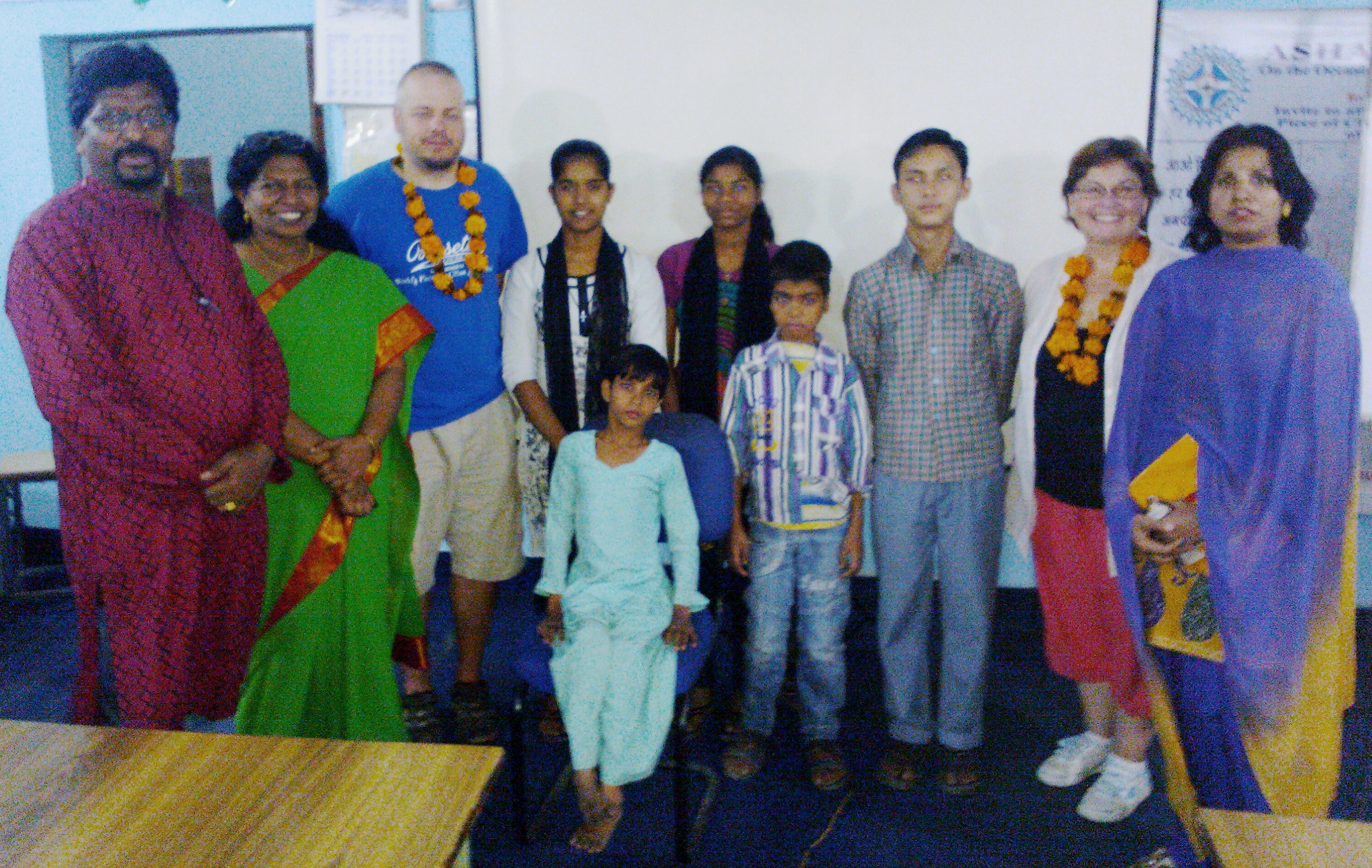
While drinks were brought out, Jothi, Gilly and myself went to her office to hand over our donation for this trip.
I was back in thinking mode. I learnt that Jothi and Jimmy were married and had two sons. I tried to imagine how you could balance a family life against working with the disadvantaged. What sacrifices did it demand, given freely due to such a strong faith? Challenging Christians had always been a hobby of mine – but here was someone who challenged me.
Faith is about actions and not words. I saw the Christian faith being acted out in front of me by Jothi and Jimmy. Also the teachers. It was humbling and makes you question everything about yourself. Your hopes, aspirations and stupid things like our cravings for the latest gadget or piece of clothing. All of these things were placed under a very big shadow.From this time I would never quite be able to move out from this shadow.
India had broken me on the first day, it was now shaking me up. What was coming up would be so challenging that it would take months for me to be able to reflect properly on the Asha Deep Foundation – but such is their brightness, their hope and faith shone through.
 Reluctant travels in India
Leave a comment