Tuesday 23rd October 2012
Breakfast in the Metropolis always took an age. We worked out that the cook would prepare one breakfast at a time – we also encountered this at other locations. We had to get out and travel across the city for our day with the Asha Deep Foundation, but we had to sit and wait very patiently for our food.
This was the big day. The day that the trip was really all about.
The Asha Deep Foundation work with the disadvantaged, from orphans and street kids through to the elderly. To understand the size of the city and the work that they do, it is astonishing to think that at the time we visited they had 73 different programs running. We would only be looking at one slum, visiting schools and the orphanage – an insight into the third world that very few westerners ever experience.
I was still having very mixed and confused emotions. There were things happening that I could not understand, but there was also a beauty and something of the ‘other’ that transfixed. Walking to the Metro station there was a small shrine to a deity. Inside the dimly lit square building there were tables with candles, a statue of a half-man, half-animal, smoke and many coloured flowers. Busy commuters would stop, take their shoes off and enter to pray. Trying to comprehend this society that wants to be a global leader in the twenty-first century and watch these practices (so alien to me) is hard to comprehend, as I stated from the previous day. The shrine sat in the shadow of the cutting-edge, ultra-modern Metro…
Our next task: get the group across one of the busiest transport systems in the world. Buy tickets, identify the stations we had to change trains, locate our destination. And then split the group between the boys and girls – leaving me with responsibility for the boys.
Train carriages on the modern Metro have the first two carriages for women only, a positive and much-needed policy. The carriages are packed to suffocation levels and they were no place for our girls, or any women.
We stood looking the map attempting to buy tickets to cross the city. There would be a couple of changes, but eventually we paid our money. It is a mass transit system, there were not too many foreigners to be seen, but it felt good to be traveling this way.
Security meant passing through scanners and bags were checked, which was quite comforting. Some of the scanners were even switched on. Then we could join the masses and attempt to board the train.
It was going to be impossible to try and stay together, each student was given very clear instructions about what to do and where to get off. More importantly they should not panic, if they missed the station then keep calm, get off at the next one and board the next train coming back. The girls were safe together but the boys got separated into two groups.
We did miss our station, but it just added to the adventure of having to work our way back to meet up with the rest of the group. The return journey was one of the maddest fifteen minutes of my life – more of that later.
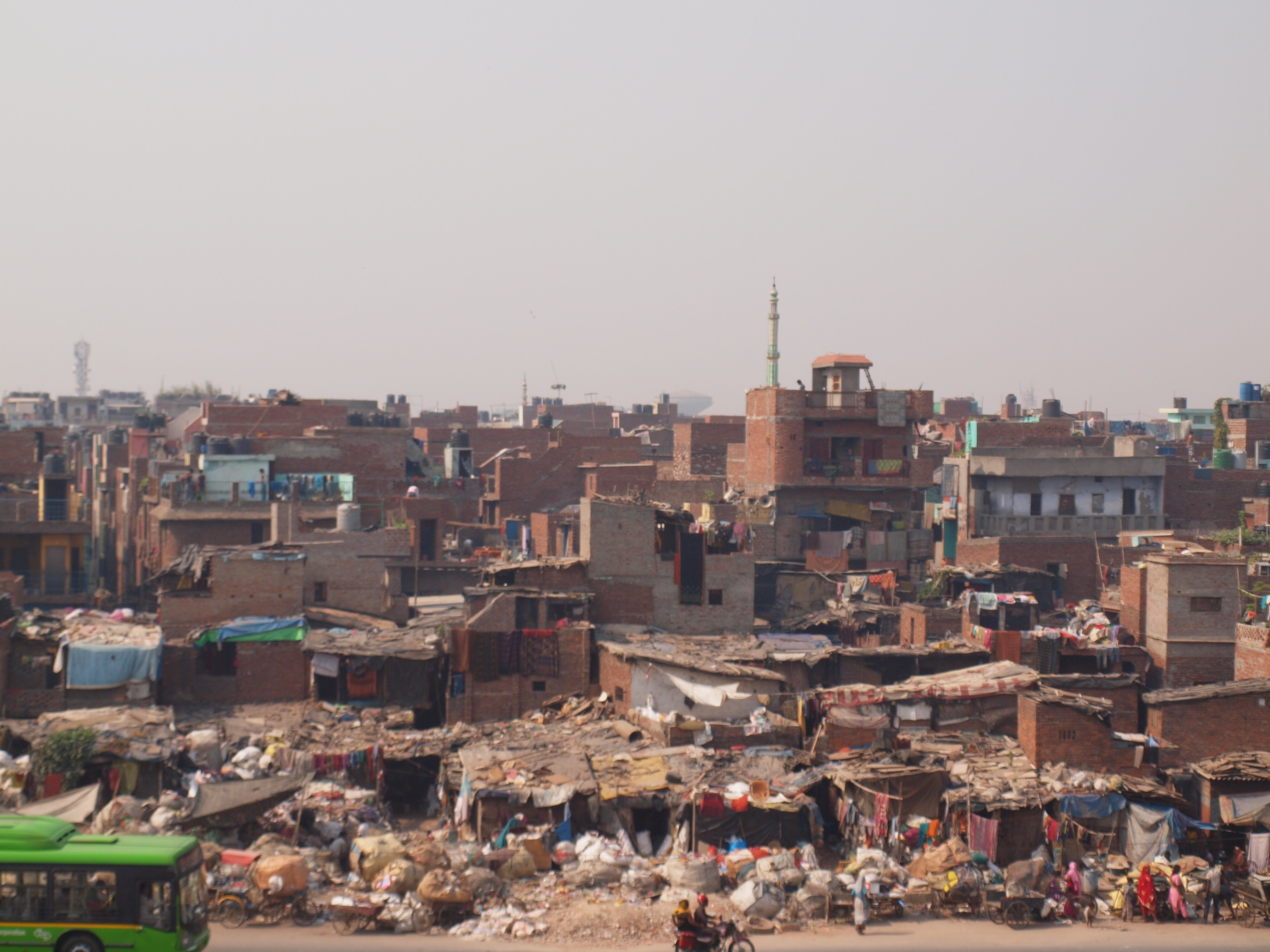
As we left central Delhi we were able to see how vast the city was. The landscape, always built up, sometimes modern buildings, sometimes groups of corrugated iron and plastic sheeting that passed as homes.
Sharing that carriage across Delhi with a diversity of people was one of my greatest experiences. There have not been many times in my life when I have been the ‘other’.
I mean that in a positive way. We were the strangers, the obvious strangers. We were stared at, smiled at, eyed suspiciously. Some of our fellow passengers wanted to say hello, others did not seem to want to acknowledge our existence. But for some strange reason I was enjoying this. It was not even the thought of being out of my comfort zone, I truly felt, for the first time in my life, that I was an object of curiosity – purely based on being a white westerner. Did people of other creeds and colours feel this way when they travelled to far-off countries. It intrigued me, I searched the faces of those around me – what were they thinking?
As we got further from the centre of the city the Metro became less crowded and we had time to talk and wonder what to expect when we arrived. The experience of the Metro had temporarily made me forget our purpose. It might even have been one of my more comfortable moments, I felt happy to be a traveller. Maybe I was fighting back?
We got on the Metro at Ramkrishna Ashram and headed towards Rajiv Chowk. Changing trains we went south to Patel Chowk, before realising our error, getting off, get back on the next north bound train to Rajiv Chowk again – arriving at the station that would lead us towards Dilshad Garden – near the end of the line.
At Dilshad Garden we exited the train and the new Metro station. This was a different Delhi. Still busy, but not so suffocating. There was still the traffic but the road was wider, there were signs of some investment. A McDonalds was being constructed under the station, bringing the idea of the western world to areas bordering the slums.
We were met at the station by Jimmy from the Asha Deep Foundation. He was a ‘jolly, larger than life’ man, an instant friend who made you feel welcome. His contagious smile and laugh was comforting .Boarding the old yellow bus we moved away from this area towards the Foundation’s Centre.
The roads became narrower, in every building there seemed to be a small business – a bundle of tyres, wire rope, motorbike parts. People sat in front of their small shops, the heat of the day was rising and a big yellow bus full of westerners was receiving some attention.
We weaved through the streets and the buildings and it became more claustrophobic before we arrived at the gates of the Foundation. Like a film set, the large gates were opened and we drove into the yard. They were hurriedly closed behind, keeping the onlookers out.
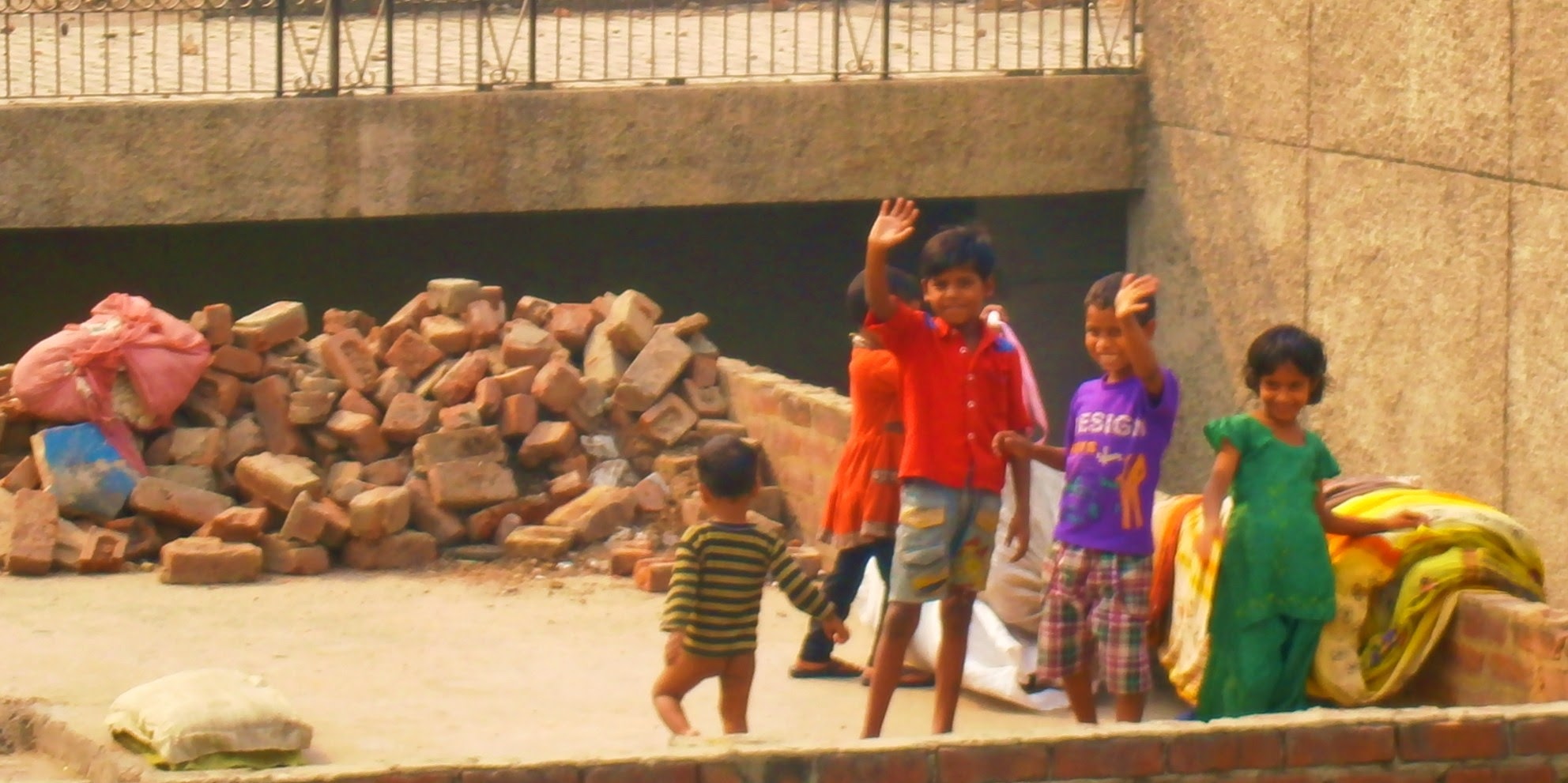
It was a large courtyard surrounded by off-white and faded yellow buildings. From what we had seen in India they were in good condition. I got the impression that houses in India are constructed up to the point that they can be lived in. Once you move in, it does not matter what state the property is in, no more work is done. That’s it. If the roof is not quite finished, or painting not completed – that’s not important. If the electric wires are dangling down across the street – that’s not a problem. Everything seems unfinished, as if they will come back another day, but that day never seems to come.
(Next – seeing the charity’s work and our walk through the slums.)
 Reluctant travels in India
Leave a comment